Leopard from the pristine riverine forest of Kumbukkan
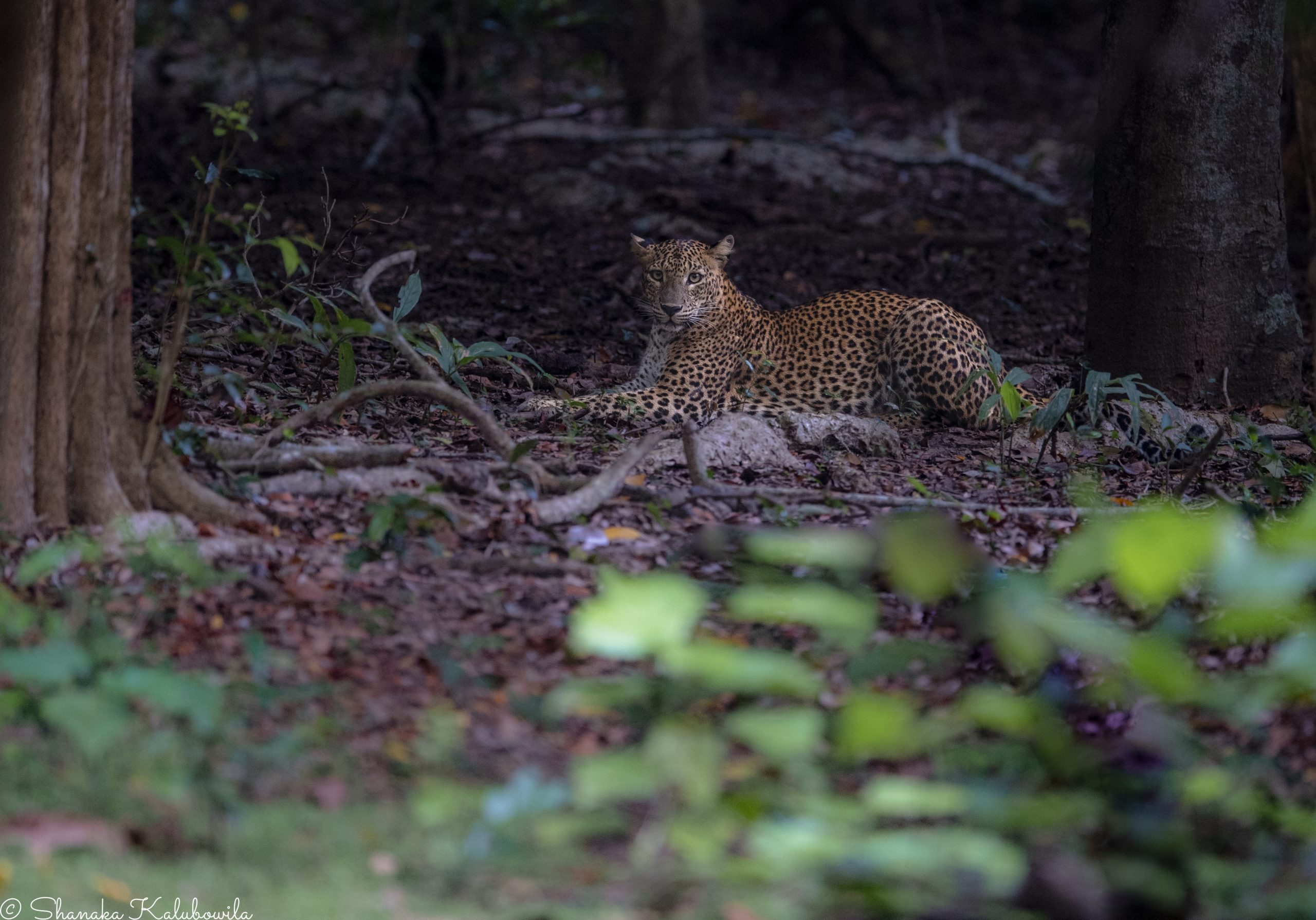
By merging with the riverbank’s vegetation and deep dark forest canopy near the water, leopards become incredibly difficult to spot, even at close range. Their rosette formation and fur coloration help them blend seamlessly into their surroundings. While rivers can provide an essential water supply, leopards may also frequent these areas to prey on animals that come to drink or graze, particularly during the dry season when water is a luxury.
We were just about 10 minutes to the morning drive from camp when we spot this female (KLF24) along with KLM25 just passed Gal Amuna along the river road.
Considering the diverse eco system distribution within a short span of distance, Kumana is one of the few parks that offers to find leopards in wide range of eco systems from semi-arid thorn scrub with equally large areas of dense forest to large rocky outcrops to riverine forest to large saline lagoons boarding to sand dunes within a drive of few minutes.