
Recent Observations on KLF23 – Kesha and KLM39 – Rivi

KLF23 – Kesha was first recorded in 2021 and has since been a consistent presence around the Kumana Wewa. Over the years, she has been observed in the company of several other leopards, including KLM21, KLM27, KLM31, KLF10, and KLM39.
In late 2024, Kesha was seen with a tiny cub. Unfortunately, just a few weeks later, the cub was found dead – likely killed by another leopard, judging by the injuries.
KLM39 – Rivi is a cub from Ridhi’s (KLF10) 2023–2024 litter. From the very beginning, he too has been sighted around Kumana Wewa. During the first recorded sighting, Rivi was estimated to be around 4–5 months old in 2024 March.
Fast forward to March 2025—we began observing Kesha and Rivi courting and what appeared to be of mating behaviour over a period of about a month. This was a surprising observation, as our historical records suggest Rivi would have been under 1.5 years old at the time. It is widely believed that, male leopards typically reach sexual maturity when they are between 2 to 3 years, making this courtship unusual.
Then, in late July 2025, Kesha was seen with a tiny cub, likely about two months old. Even more remarkably, Rivi was accompanying both Kesha and the cub. Multiple sightings since then have shown the trio together. In some instances, Rivi has been seen guiding or watching over the cub, while Kesha moves ahead at a distance.
We’ve never seen a dynamic quite like this before. While there are rare instances recorded across the world where:
1. Subadult offspring assisting a mother with a new litter.
2. Females adopting unrelated cubs.
We haven’t come across any documented cases of an unrelated sub adult male leopard acting in a caregiving or protective role toward a cub, as seen here. This may be a recorded instance of an unrelated subadult male leopard showing alloparenting behavior and may point to new insights into leopard social dynamics.
There are several unusual aspects here;
1. Rivi’s Mating Behavior
It’s unusual that a subadult male like Rivi was able to court Kesha for months, especially in an area where dominant adult males like Nandi, Ritta, Wickra, and Kubhira frequently roam and have previously mated with Kesha.
2. Paternity Doubts
While female leopards often mate with multiple males—making it hard to confirm paternity—the evidence suggests it’s highly unlikely that Rivi is the cub’s father, given his age and the established scientific data on leopard fertility.
3. Male Caregiving
It’s rare, if not unheard of, for a male leopard, especially a subadult, to remain with a female and a cub and exhibit behaviors that suggest protection and guidance.
Although we can not draw firm conclusions on exactly whats going on here, some hypotheses include:
1. Rivi’s age and behavior:
As a subadult (under 2 years), Rivi may not yet have fully developed the solitary nature typical of adult males, making him more tolerant and even social with the cub.
2.Kesha’s loss and adaptation:
Having lost a cub recently, Kesha might be more accepting of Rivi’s presence, possibly seeing his company as an added layer of protection for her new cub.
This is an incredibly fascinating behavioral pattern unfolding in Kumana, and we will continue to monitor and record further sightings closely.
The first sighting of the trio was sent to us in late July 2025 by Shohan Wijesinghe and Namal Kamalgoda. Since then, several others have also spotted them around Kumana Wewa.
We deliberately delayed sharing this post and approving related sightings on our facebook platform. While early sightings are certainly exciting, we believe in giving new cubs a chance to settle in without drawing too much attention. Overexposure can lead to increased human interference, and we feel it’s our responsibility to share updates thoughtfully, ensuring that these animals adjust to their surroundings in a safe and gradual manner.
Special thanks to Namal Kamalgoda, Jayathu Amarasinghe Roshana Prasad for sharing these amazing pictures.
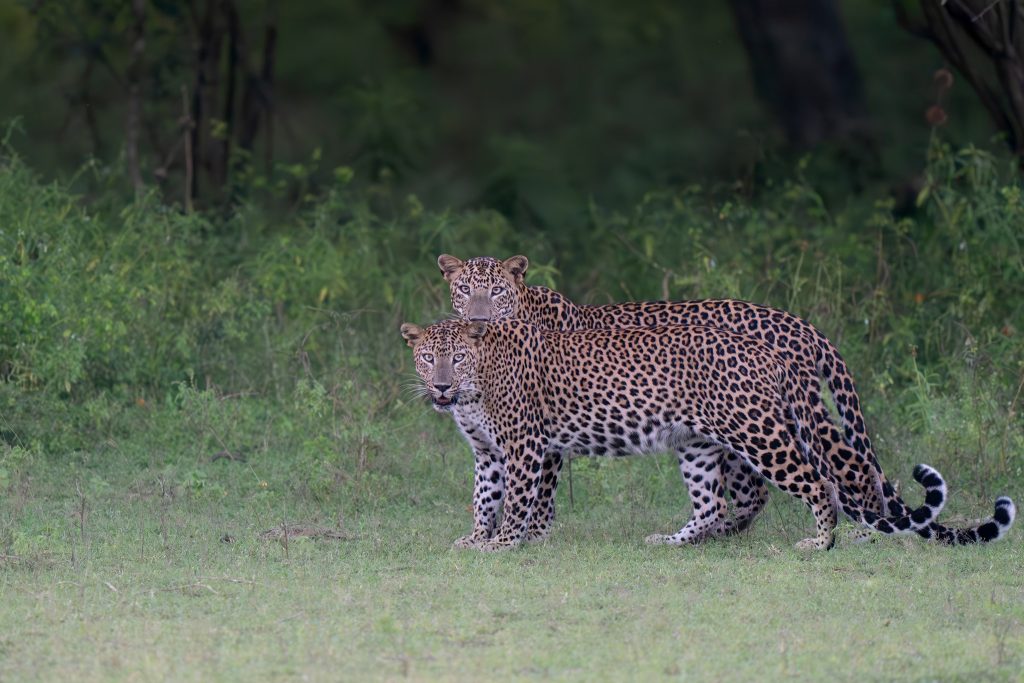
March 2025
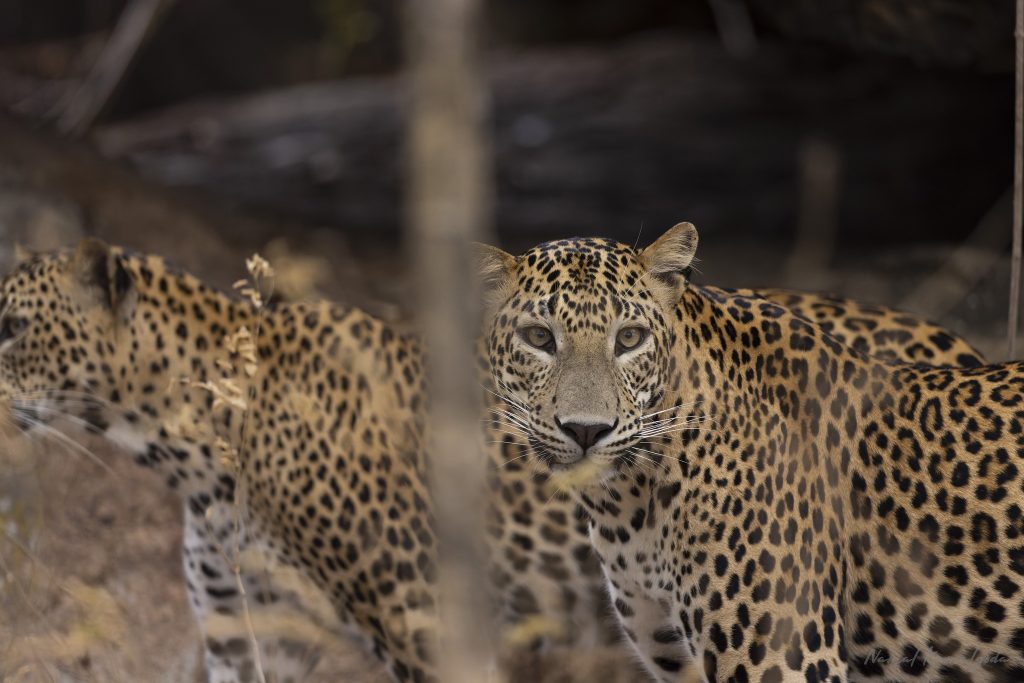
July 2025
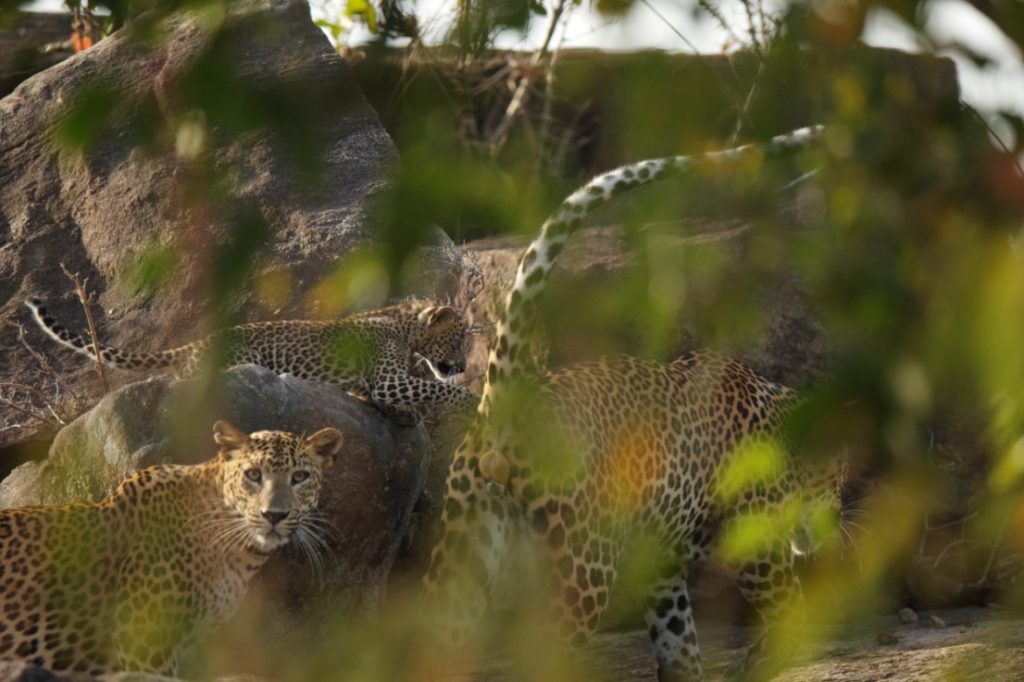
Interestingly this story can be looked at from another angle;
KLF10 – Ridhi (mother of KLM39 – Rivi) has shown a continued absence from the Singanalena area, which has historically been considered part of her core range. Ridhi was frequently recorded there while raising her 2022 litter (Ritta and one sibling) and the 2023 litter (Rivi).
Since February 2025, her presence in Singanalena has steadily declined. More recently, she has been observed spending greater time toward the western boundary of her range. Sightings have been documented at Boaththagala Junction to Kumana Wewa 3rd junction and between Eraminiyangas Wewa and Aluthgama Wewa, suggesting a possible shift in range use preference or a concession of the Singanalena area for reasons that remain unclear. The most recent confirmed sighting we received (at the time of this post) was on 05.09.2025, closer to Boaththagala junction, on the wewa 3rd junction rd.
The last confirmed sighting between KLF10 and KLM39 – Rivi was recorded on 08.02.2025 at Singanalena. At that point, Rivi was estimated at approximately 15–17 months of age. While this is slightly earlier than the typical age of mother–offspring separation, subsequent observations confirm that Rivi has adapted successfully as a solitary subadult male, with multiple independent sightings indicating his continued survival.
This situation is noteworthy: Ridhi remains alive in an adjacent, partially overlapping range, while her subadult male offspring has established independence and has even been observed engaging in courtship behavior with Kesha, a female from the same natal area.
While rare cases of cub adoption by related or unrelated females have been documented previously in situations where the mother is absent, this appears to represent an early natural separation event rather than abandonment or adoption.
There are precedents of cubs surviving independently following early separation. A recent example from Kumana is KLF41 – Arya, whose history is detailed in an earlier post: https://www.facebook.com/share/p/16JzpCraVX/