Visible Survival Rate of Cubs
Dear Friends,
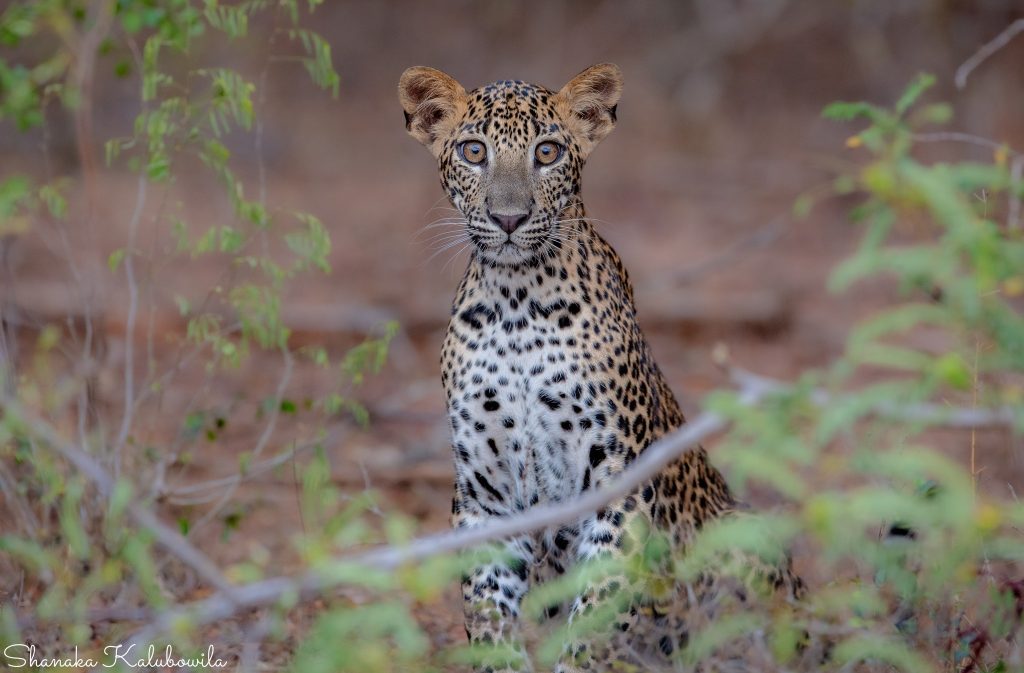
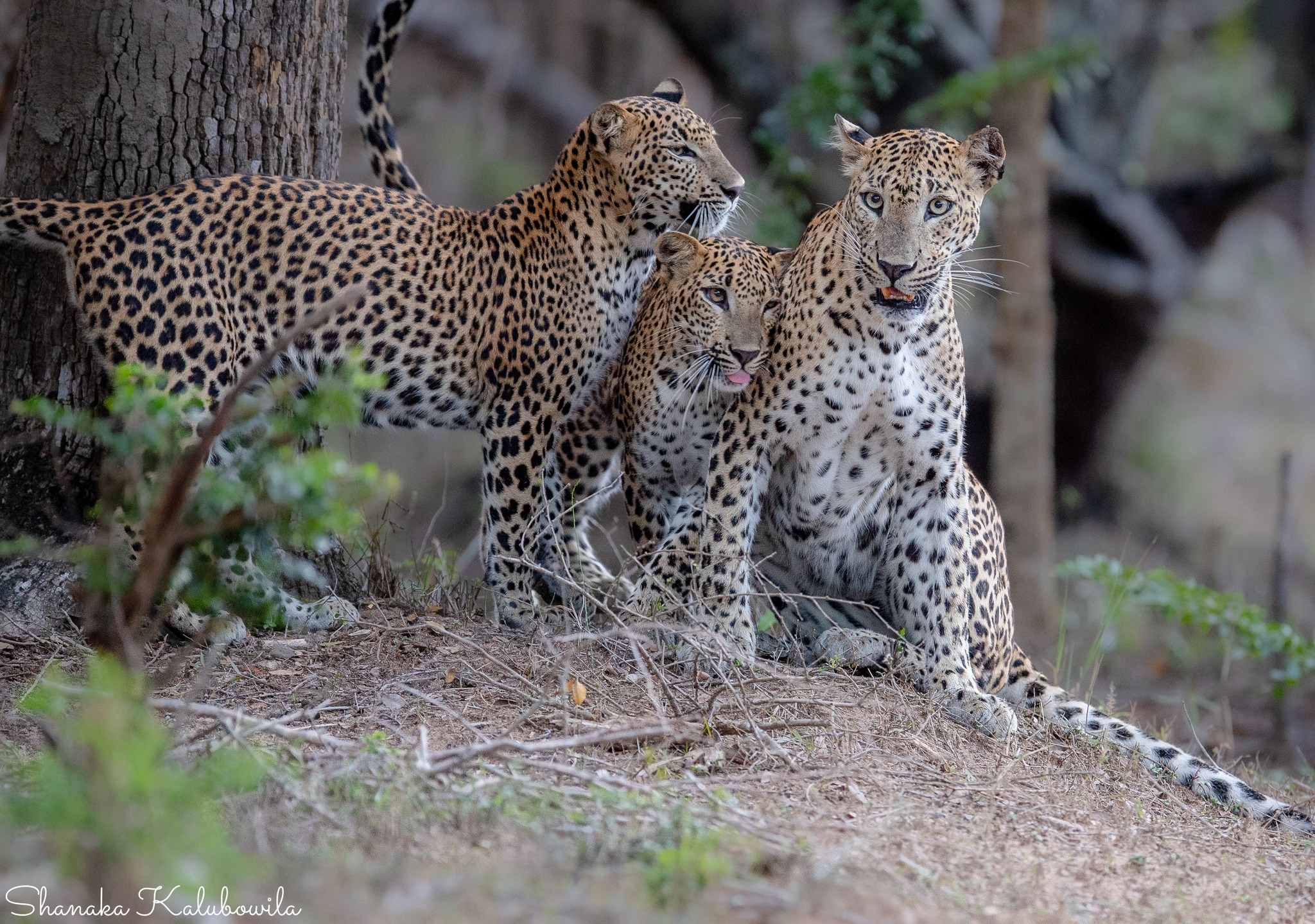
While we celebrate Sri Lanka Leopard Day (thanks to WNPS/DWC/SL Govt.), today we want to highlight glimpse of data we gathered over the years particularly on Leopard Cubs of Kumana – the future of Panthera pardus kotiya.
To understand and draw solid conservation plans, it is essential to know if Leopard numbers are increasing, or decreasing, and how quickly their numbers are changing. Reasonably identifying how many of them are living, dying and what causes such deaths within a certain time frame may assist us determine answers to this. However, it is also vital to recognize the reproductive data, how many are being born and how many of them survive beyond as cubs to subadults then to mature adults.
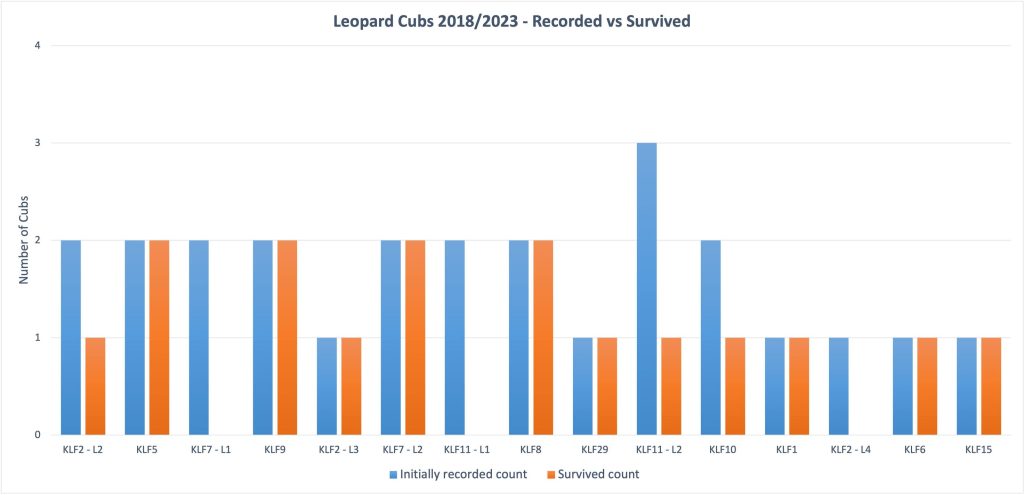
With visual observations from 2018 to 2023 we came across 15 different litters of cubs within the park accumulating to 25 new individual cubs. 2022 was a momentous year where 6 different litters of cubs were recorded totaling to 10 new individual cubs just within 12 months.
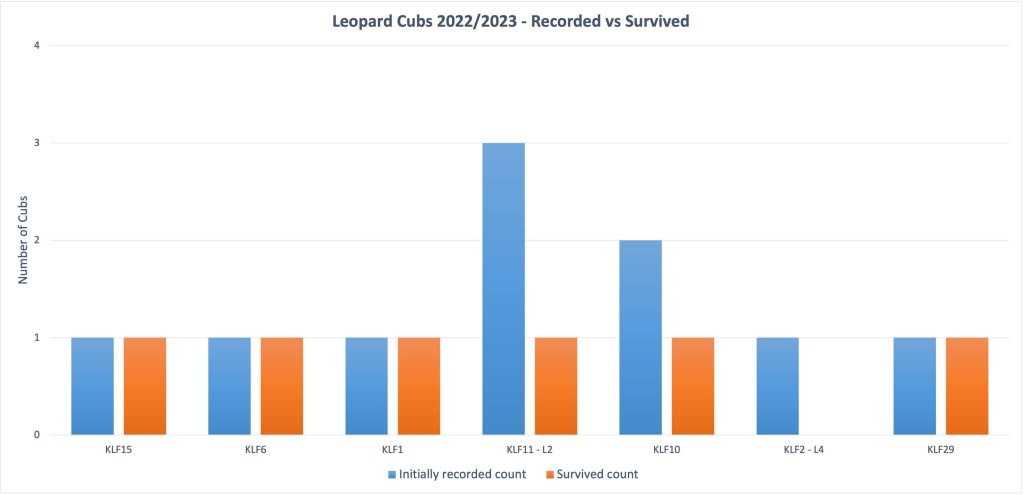
Despite many new cubs being born, when we review the ‘visible survival rate’ between initial sighting up to one year of time, we identified that, around 64% of the cubs over the past 5 years survived into sub adult stage. When we look at the “Recorded vs Survived” data of the recent 18 months (2022 Jan -2023 June), the rate is about 60% where 6 out 10 cubs survived the approx. 12 months window or still observable as we speak.
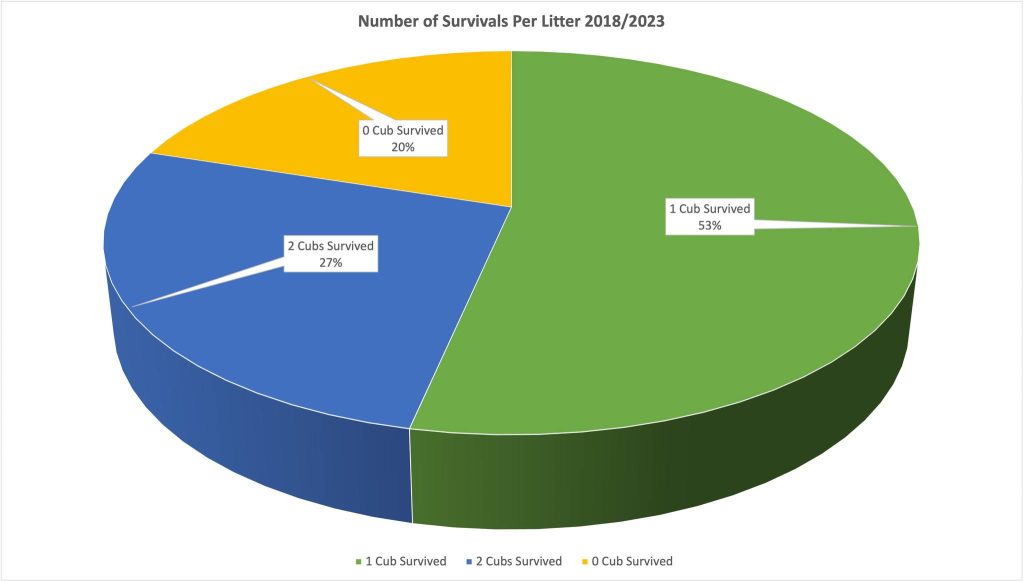
Cruising further into these data from a different viewpoint, ‘number of survived cubs per litter’ for last 5 years data (2018-2023 June); survival of just one cub per litter is the highest with 53% of incidents. Survival of 2 cubs is at 27% and chances of no cubs survived per litter is at 20%.
Considering these records, it may materialize the last five year survival figure is about 64% (from citizen science point of view), however we strongly believe it’s still too early and more data collection is needed to be continued over the coming years and data must be generalized beyond citizen science view point for us to conclude if these numbers are of a definite encouraging trend or an undesirable drift for the growth of leopard population in the east coast – particularly in Kumana. For meaningful conservation efforts, we understand the importance of following up over multiple generations of leopards and observe what factors influence survival of their offspring to adulthood. However more receptively now we have a certain base data set established to carry over to subsequent years and study these trends expressively which will assist us learning and identifying factual growth trends and any actions required to be suggested if at all it becomes necessary.
It is important to highlight some of the assumptions and considerations made while collecting/analyzing data;
- To conclude whether the cub has survived or not; we considered a sighting window of 12 months period since the initial sighting. Specifically, A 12-month window was chosen as 1st 12 months generally benchmarked as the most challenging chapter of their lives. Based on the size of the cub at initial sighting we had to make an assumption of its approx. age.
- If any cub dies before they are even seen by visitors, then they are not going to be captured in the litter size.
- These data are not generalized yet and only represent an observable, confirmed sample based on visual observations we made for past 5 years.
- Study area was characterized by semi-arid thorn scrub with equally large areas of dense forest to large rocky outcrops to riverine forest to large saline lagoons boarding to sand dunes.
- Study is performed based on data collation on verifiable sightings and conducts observed by regular visitors and park officials and considered as a citizen science study. None of the published data were collected through camera traps or using any other remote devices. All data gathered/presented are collected within the boundaries of regular park visitor’s permits and no superior authorizations beyond that were accompanied by visitors.